


Personalised treatment for improved patient outcomes
Solutions
Solving the treatment gap

Treatment gaps and patient impact
There are no drugs to treat AAA, so surgical repair is the only option for patients. AAA repair has a peri-operative mortality, a high cost, and poor durability with repeat surgery in up to 20% of patients and rupture still occurring after repair.
Conservative management of small AAA causes significant stress to patients due to concerns about rupture. Also, basing decisions about AAA management on diameter alone has multiple limitations, as it incompletely predicts rupture risk and disadvantages women who have a higher risk of small AAA rupture, and fails to consider the individual biology and the biomechanics of an AAA.
Potential medical therapies
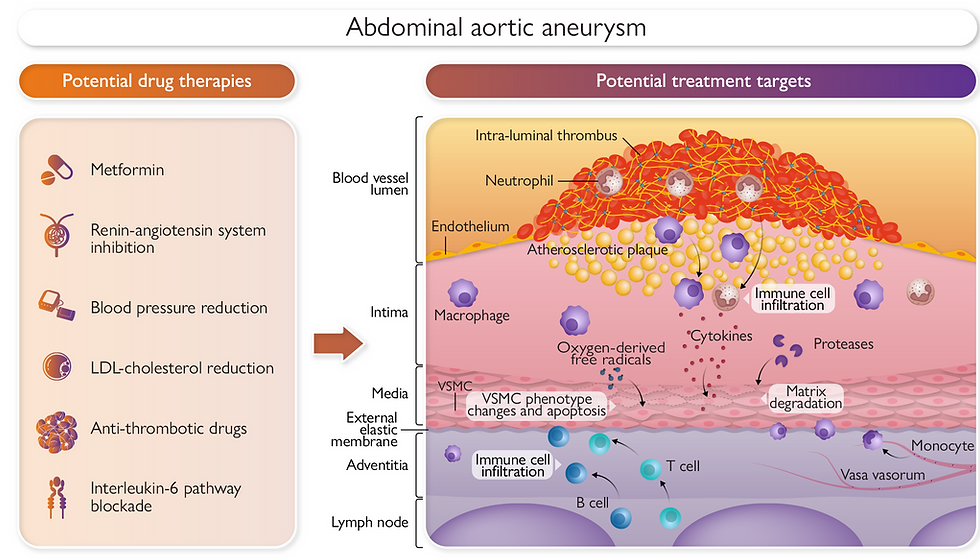
This diagram illustrates drug strategies and associated therapeutic targets within the aortic wall. Key pathological processes in AAA include immune cell infiltration, inflammation, oxidative stress, vascular smooth muscle cell (VSMC) apoptosis, and matrix degradation. Potential treatment targets span the endothelium, intima, media, and adventitia. Therapeutic strategies under investigation include metformin, renin-angiotensin system inhibitors, blood pressure and LDL-cholesterol reduction, anti-thrombotic drugs, and IL-6 pathway blockade.
Pipeline to advance AAA care
By using an integrated laboratory and clinical research program we hope to bring about significant change in AAA care. Providing the grounding for a change in treatment model from one that offers patients no alternative treatment to surgical repair to one that selects patients for targeted treatment including new drug therapies based on personalised assessment.

Research goals
Reduced burden

